Featured Stories
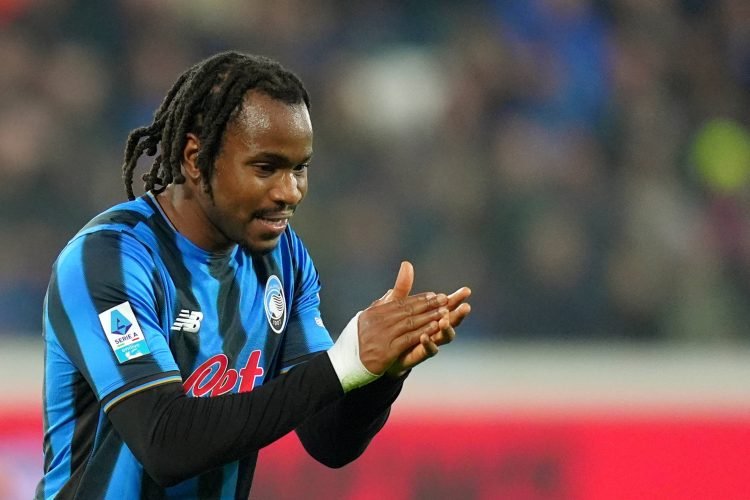
Ademola Lookman: Atalanta star sets impressive scoring record against Fiorentina as Atalanta win 2–0
Super Eagles attacker Ademola Lookman was once again at the heart of the damage as Atalanta completed a commanding 2-0 win against Fiorentina, Soccernet.ng reports. The Nigerian forward, who has rediscovered top form under new boss Raffaele Palladino, scored early in the second half to seal the victory after Odilon Kossounou’s first-half opener. With today’s strike, the Super Eagles star has now scored six career goals against the Viola. The Nigerian has now netted six times against the Viola—more than against any other team in his career, per Tuttomercatoweb. Behind Fiorentina on Lookman’s personal scoring list are Napoli and Empoli where has scored five goals each, followed by AC Milan with four goals. This shows Lookman’s instinct in big games and his ability to exploit Fiorentina’s defensive weaknesses. Match highlight: How Lookman made it six Atalanta were already in front through Kossounou’s looping effort late in the first half, but the decisive moment arrived just six minutes after the restart. A fast Atalanta transition forced Fiorentina’s defence into chaos, and after a rebound dropped kindly inside the box, Lookman reacted quickest, steering the ball home with confidence. Fiorentina’s back line, already stretched, had no answer for his acceleration and awareness. The strike doubled Atalanta’s lead and extinguished any hopes Fiorentina had of mounting a comeback. Lookman looks fired up, refreshed, and mentally reset under new manager Raffaele Palladino, who has restored freedom and expression to his game. This is a stark contrast to his time under former manager Ivan Jurić, whose difficult relationship with the Nigerian included heated touchline exchanges and tactical restrictions that clearly affected Lookman’s confidence. Add to that the turbulent year are his transfer-exit controversies, Gian Piero Gasperini publicly criticising him for a missed penalty, and internal frictions that took a mental toll. Yet today, Lookman looks reborn. Back-to-back goals in two games shows a sign of a rediscovered form and with the Africa Cup of Nations just 21 days away, Lookman appears to be hitting peak form at the perfect moment for the Super Eagles. If he continues this way, Eric Chelle’s men may well have their most dangerous version of Lookman heading into the continental tournament.
Read More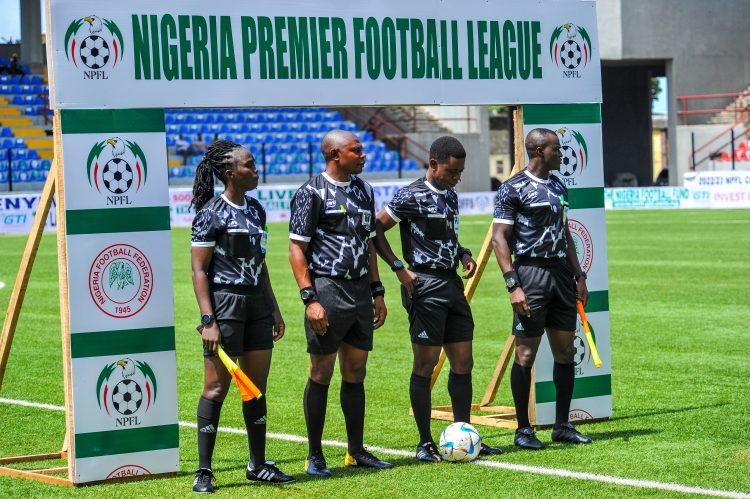
‘We were invited’ – NRA boss reveals why no Nigerian referee made AFCON 2025 list
The Nigeria Referees Association President, Sani Zubairu (FIFA Rtd) has issued a firm clarification after CAF released a 73-man list of match officials, none of whom are Nigerian. CAF last week unveiled the full roster of referees, assistant referees, and video assistant referees for the Morocco tournament, with none of the country’s officials making the final cut. The omission fuelled claims that CAF had sidelined the country, particularly given Nigeria’s status as a three-time African champion and a regular presence at major tournaments. But speaking on the matter, Zubairu dismissed the narrative that Nigeria was excluded. Zubairu stressed that the issue was not neglect, but performance. According to him, two Nigeria FIFA-graded officials had been called up for the pre-tournament training phase, but both fell short of CAF’s requirements. “We have the centre referee and assistant referee who were invited when they went for a course in Egypt. Unfortunately, our referees did not pass the physical and technical test and were dropped. “So that is the issue. It’s very unfortunate to know that we were invited, given the opportunity but we couldn’t make it. So that is the position.†Zubairu explained that CAF’s selection process is rigorous and involves multiple qualifying layers. “Once you are invited, it’s a screening exercise, it’s a test, you have to participate in the physical, tactical and medical test. And once you do that, from there, the officials that are going to be used for the tournament are picked, so that’s what happened,†he added. occernet.ng earlier confirmed that no Nigerian official appeared on CAF’s final 73-man shortlist comprising 28 referees, 31 assistant referees and 14 VAR officials. Countries such as Benin, Gabon, Côte d’Ivoire, Ghana, Mali, Niger, Mauritania and Senegal were included. Nigeria stood out as the only former AFCON-winning nation in West Africa without a named official. AFCON 2025 will run from 21 December 2025 to 18 January 2026, with all selected officials reporting to Morocco by 15 December for an intensive preparatory camp covering physical drills, technical sessions and theoretical assessments.
Read More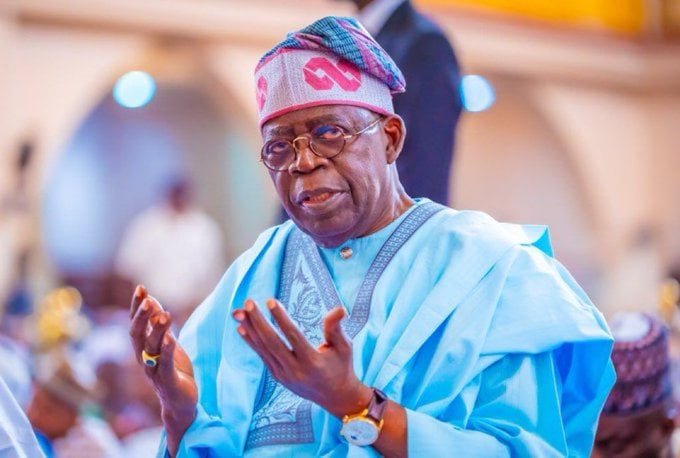
10 government decisions that shaped Nigeria in 2025
From emergency powers to education reforms, passport fee hikes and security initiatives, 2025 was a year in which government decisions reverberated across Nigeria. Some sparked controversy, others offered hope, but all left a mark on the nation. Here are the 10 biggest government actions that shaped the year 2025. Emergency Rule in Rivers State In March 2025, the Federal Government declared a state of emergency in Rivers State, suspending the governor, deputy governor and all state lawmakers for six months. The move followed a protracted political crisis in the state, during which the governor dissolved the state legislature. Observers attributed part of the conflict to a bitter power struggle involving former Rivers governor‑turned‑FCT minister Nyesom Wike and Governor Siminalayi Fubara. Opposition politicians described the decision as an attempt to override the people’s mandate, arguing that the president had no constitutional right to remove elected officials simply by declaring an emergency. Though the emergency rule was lifted after six months and elected officials reinstated, the controversy left many questioning federal overreach. 2. New national school curriculum for 2025/2026 session In 2025, the federal government rolled out a revised national curriculum for primary and secondary schools ahead of the 2025/2026 academic year. The new syllabus includes expanded vocational, technical, and digital-skills training. This reflected a shift toward skills-based education. The new syllabus also includes the introduction or strengthening of national history, heritage, and civic studies components. One of the biggest shifts is the introduction of vocational and trade‑oriented subjects, even at basic and junior‑secondary levels. For many parents, teachers, and students, the curriculum change was among the most visible education reforms of the year. This prompted debates on whether schools are ready to deliver practical training and whether resources are in place for effective implementation. 3. Passport Fee Hike to ₦100,000 The Nigeria Immigration Service announced in August that the standard five-year passport would now cost ₦100,000, while the ten-year passport would be ₦200,000. Previously, these passports cost ₦50,000 and ₦100,000, respectively. The change took effect on September 1, 2025. NIS explained that the increase was needed to fund automated processing, reduce issuance delays, and strengthen passport security. Interior Minister Olubunmi Tunji-Ojo said the reforms would allow applicants to receive passports within a week. This is a dramatic improvement over the months‑long delays previously common. The Minister of Interior, Olubunmi Tunji-Ojo. File photo Despite government assurances, Nigerians expressed frustration as many described the move as arbitrary and urged the government to provide exemptions or subsidies for low-income citizens. Labour and civil society organisations, including the Nigeria Labour Congress, condemned the increase as “exploitative,†especially at a time of economic hardship and inflation. 4. Nationwide security emergency and mass recruitment of police and forest guards In November, faced with rising abductions, banditry, and insurgency, the government declared a nationwide security emergency. It announced the recruitment of 20,000 new police officers and authorised the deployment of forest guards to tackle armed groups hiding in remote areas. President Bola Tinubu said the move was imperative to protect lives and curb insurgency before it spreads further, calling on security agencies to prioritise rescue operations and secure vulnerable zones, including schools, places of worship and rural communities. The declaration reflects mounting public concern over nationwide insecurity, a top issue on the minds of many Nigerians at year-end and signifies a shift toward a more aggressive federal security posture. Whether the new recruits and forest-guard deployment will sustainably improve security remains to be seen. 5. Tax Overhaul In June 2025, the president signed four sweeping tax reform Bills into law — including the Nigeria Tax Act, 2025, the Nigeria Tax Administration Act, 2025, the Nigeria Revenue Service (Establishment) Act, 2025 (NRS) and the Joint Revenue Board (Establishment) Act, 2025. These laws repealed and consolidated multiple outdated tax statutes, repealed complex overlapping tax laws, and established a new, centralised revenue-collecting body. The move is meant to simplify tax compliance, broaden the tax base, and reduce leakage. This shift could alter how businesses operate and how public finances are generated. 6. Nigeria finally moves to fill ambassadorial posts After more than two years of delay, President Bola Tinubu, in November 2025, submitted the names of three non‑career ambassadors to the Senate for confirmation, including Kayode Are, Aminu Dalhatu, and Ayodele Oke. The move ends a prolonged diplomatic vacuum in which most Nigerian embassies and high commissions were led by chargés d’affaires rather than formally appointed ambassadors. The delay had been widely criticised. Political observers, diaspora groups, and even opposition parties warned that the absence of ambassadors weakened Nigeria’s voice internationally, hindered consular services, and negatively affected trade, investment, and bilateral relations. While the confirmation process is still underway, this decision marks a critical institutional move, signalling the government’s renewed focus on foreign policy and international engagement after years of underrepresentation on the global stage. 7. Tinubu replaces top service chiefs In October 2025, President Tinubu carried out a sweeping overhaul of Nigeria’s military leadership — replacing most of the top service chiefs in a bold effort to reorient the nation’s security architecture. Under the shake-up: Olufemi Oluyede — previously Chief of Army Staff — was appointed Chief of Defence Staff, replacing Christopher Musa. Waidi Shaibu became Chief of Army Staff; S.K. Aneke was named Chief of Air Staff; and Idi Abbas assumed the post of Chief of Naval Staff. One senior position, Chief of Defence Intelligence — held by E.A.P. Undiendeye — was retained. According to the presidency, the reshuffle was intended to strengthen Nigeria’s national security architecture. The shake-up came at a turbulent time for Nigeria — with persistent violence, insurgency, banditry, and unrest across multiple regions. Many saw the leadership change as a strong signal that the government was serious about recalibrating security strategies to match evolving threats. 8. Maryam Sanda case — Clemency controversy In October 2025, the federal government initially included Maryam Sanda on a broad clemency list — along with about 174 other convicts — granting her “mercy†for the 2020 conviction of culpable homicide. Sanda had been sentenced to death by hanging for the killing of her husband, Bilyaminu Bello, following a domestic dispute in 2017. The announcement triggered immediate, widespread public outrage. The family of the deceased condemned the decision. They condemned the idea that Sanda could “walk free†after taking a life, calling it a deep wound reopened for them. Opposition figures and civil society voices added their voices, warning that pardoning a capital offence convict set a dangerous precedent and risked undermining public trust in justice. Facing the backlash, the presidency re-reviewed the clemency list. By late October 2025, Sanda was removed from the outright pardon list; instead, her death sentence was commuted to a 12-year jail term. The final clemency exercise saw the list of beneficiaries trimmed significantly, with many convicted for serious crimes — including homicide, kidnapping, drug trafficking, arms offences — deleted 9. Pardons & Honours: 2025’s Reckoning With History and Mercy In October 2025, Tinubu exercised his constitutional prerogative of mercy — granting a wave of pardons and clemencies – while also awarding national honours. Among those posthumously pardoned were prominent historical figures widely regarded as national icons: Herbert Macaulay — a pioneer of Nigerian nationalism whose 1913 colonial-era conviction had long tainted his legacy — and Mamman Jiya Vatsa, a military officer and poet executed in 1986, who many believe was wrongfully condemned. The clemency extended to members of the Ogoni Nine — including Ken Saro-Wiwa, who were executed by a military tribunal in 1995 for their activism against environmental degradation in the Niger Delta. Their pardon was hailed by supporters as a symbolic restoration of dignity and a formal repudiation of past injustices. Beyond posthumous cases, the clemency list included living convicts — from those convicted for non-violent offences to some serving long terms — many of whom reportedly showed good conduct, remorse, or rehabilitation. In total, the pardon and clemency exercise covered 175 beneficiaries, combining full pardons, sentence commutations, reduced jail terms, and mercy for convicts, former convicts and exonerated deceased persons. 10. NELFUND 2025: Student Loans, Opportunities and Oversight Challenges In 2025, the Nigerian Education Loan Fund continued its push to provide financial support to students in tertiary institutions, making tangible impacts on tuition payments and student upkeep, even as controversies tested public trust in the system. By March 2025, NELFUND had disbursed ₦45.1 billion in student loans across the country, reaching thousands of undergraduates and covering both tuition fees and living allowances. By May, total disbursement rose to ₦56.85 billion, benefitting 298,124 students in 198 tertiary institutions. The fund also successfully completed the 2024/2025 loan cycle, closing applications on September 30, 2025, and opening a new window for returning and newly admitted students from October 23, 2025, to January 31, 2026. The loans were split between tuition fees paid directly to institutions and allowances to support student living costs, providing relief to households struggling with the rising cost of education.
Read More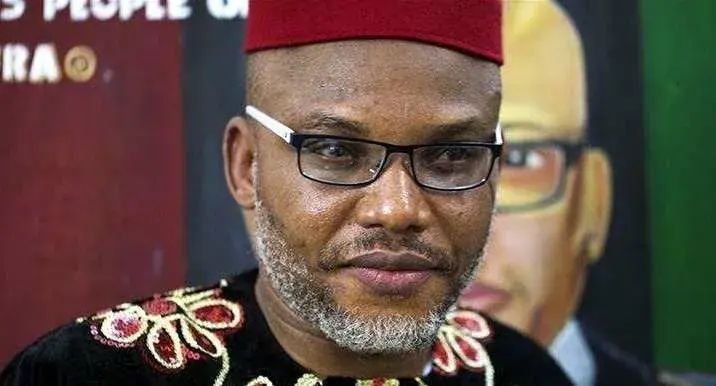
Nnamdi Kanu speaks first time from prison, makes declarations
Mazi Nnamdi Kanu, leader of the Indigenous People of Biafra, IPOB, has broken his silence days after he was sentenced to life imprisonment. NATIONAL POST reports that Justice James Omotosho of the Federal High Court, Abuja, convicted Kanu of terrorism and sentenced him to life imprisonment. The next day, it was confirmed that Kanu has been moved to.Sokoto prison. Many Nigerians, including former Labour Party presidential candidate, Mr Peter Obi have since condemned the judgement. The IPOB leader has now spoken for the first time since the conviction. Kanu's reaction to his conviction was disclosed by his younger brother, Prince Emmanuel Kanu, after a visit to him in Sokoto. Prince Emmanuel visited Kanu in company with a lawyer, Maxwell Opara. A statement made available to on Sunday by Prince Emmanuel quoted Kanu as saying he was denied opportunity to present his final written address. Kanu instated that his conviction was without legal basis. The statement read, "I Prince Emmanuel Kanu and Dr Maxwell Opara have had a meeting with Mazi Nnamdi Kanu, the leader of the Indigenous People of Biafra, at the Sokoto medium security prison. "He has instructed me to inform the public that his conviction was without legal basis, as no individual can be convicted under a repealed law. "His final written address which anchored on fair hearing was also denied, emphasized that the evidence relied upon by the court was not included in the charge sheet or presented as evidence against him. Additionally, the court's reliance on struck-out charges from Justice Binta Nyako was a significant issue. *Upon reviewing the judgment, he identified numerous errors that undermined the validity of his trial. "He urged well-meaning Nigerian justices, magistrates, and lawyers to carefully examine the judgment and uphold the laws of the land and the Nigerian Constitution. "He questioned the disparity between the favorable rulings in Umuahia High Court, Enugu, Appeal Court, United Nations, and Supreme Court, which stated that the laws under which he was charged are repealed and must be amended, yet were ignored." The statement added that Kanu commended individuals of good conscience who recognized the injustice and rejected it. "I am Mazi Nnamdi Kanu who will reject injustice, unfairness, and evil against anybody regardless of your tribe, faith, and ethnic background. Injustice to Mazi Nnamdi Kanu is injustice everywhere. "I remain thankful for all your supports, prayers, and your good thoughts. Elohim, bless you all," Kanu added.
Read More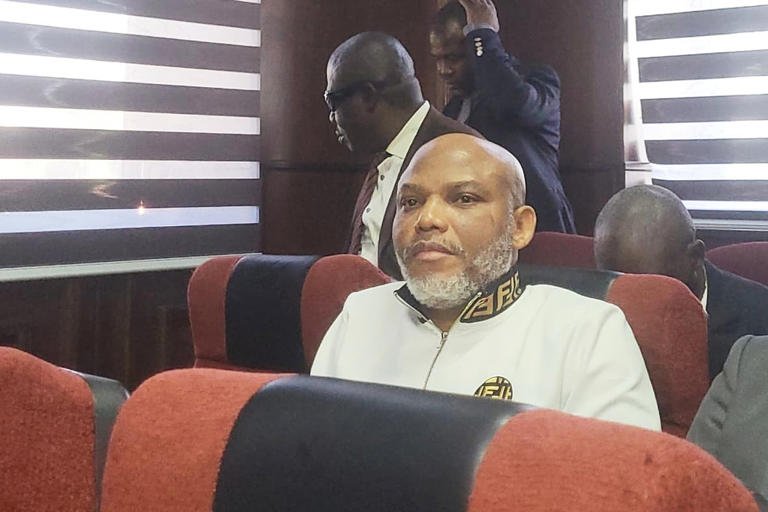
Nigerian court sentences separatist Nnamdi Kanu to life in prison on terrorism charges
ABUJA, NIGERIA (AP) — A court in Nigeria on Thursday convicted separatist leader Nnamdi Kanu of all seven terrorism-related charges brought against him and sentenced him to life imprisonment. Kanu founded the Indigenous People of Biafra (IPOB), which has been accused of terrorism and extra-judicial killings in the country’s southeastern region where it has called for the creation of an independent state. The charges against Kanu, who has rejected the court's authority, included carrying out acts of terrorism, issuing and violently enforcing stay-at-home orders that bring the southeastern region to a halt every Monday, giving guidance on how to make bombs to be used on government facilities, and incitement. Judge James Omotosho told the court that the “right to self-determination is a political right,†but he added that: “Any self-determination not done according to the constitution of Nigeria is illegal." Prosecutors had sought the death penalty against Kanu, but Omotosho said he chose to show mercy. “I must temper justice with mercy. The court will follow the admonition of Jesus Christ in the above passage and show mercy to the convict. In addition, the death penalty globally is being frowned upon by the international community,†the judge ruled Kanu had sought to revive the short-lived Biafra, a seceded region of Nigeria between 1967 and 1970, which sparked the Nigerian Civil War during that period. At least 3 million people were killed before the Biafran troops surrendered. Kanu was arrested in 2021 and brought back from Kenya after initially failing to appear in court in 2015. Last month, Kanu dismissed his entire legal team and returned to an earlier objection to the court proceedings. He refused to defend himself against the charges. “The court lacks jurisdiction to try me. My charge sheet does not contain any written law in Nigeria,†Kanu told the court before his conviction. A Lagos-based geopolitical consultancy, SBM Intelligence, earlier this year reported that the violent enforcement of the stay-at-home orders had resulted in at least 700 deaths and cost the country 7.6 trillion naira ($5.3 billion). Another Nigerian separatist leader, Simon Ekpa, was convicted in Finland in September for charges including terrorism. Ekpa, who was also a Finnish citizen, was sentenced to six years in prison for participating in the activities of a terrorist group, public incitement to commit a crime for terrorist purposes and aggravated tax fraud.
Read More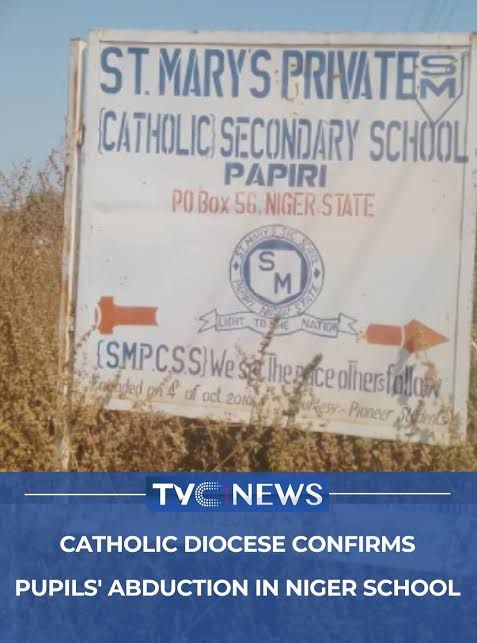
52 Catholic school students in Nigeria kidnapped by gunmen in latest attack: report
Gunmen in Nigeria kidnapped several students and staff from a Catholic school early Friday, marking the latest attack on a Christian institution. Nigerian news outlet Arise TV said 52 children were abducted from St. Mary's School. The Catholic institution is in Agwara local government’s Papiri community, according to The Associated Press, which cited Abubakar Usman, the secretary to the Niger state government. The outlet added that Usman did not specify how many children were kidnapped in the attack. The Niger State Police Command said military and security forces were deployed to the area where the attack took place in the early hours of Friday, the AP reported. Additionally, the Niger State Police Command said St. Mary's educates students ages 12-17. Following the attack, Usman released a statement condemning the abductions and stating that St. Mary's made the decision to reopen despite prior security intelligence warning of increased threats, according to Arise TV. "Regrettably, St. Mary’s School proceeded to reopen and resume academic activities without notifying or seeking clearance from the State Government, thereby exposing pupils and the staff to avoidable risk," the statement read. The attack at St. Mary's follows a similar incident earlier this week in which armed attackers kidnapped 25 girls from a boarding school in Nigeria’s Kebbi State and killed at least one staffer. The search for the abducted schoolgirls is still underway. On Wednesday, gunmen attacked the Christ Apostolic Church, killing at least two people and abducting the pastor and 38 worshippers, according to Reuters. In a video of the attack, which was reviewed and verified by Reuters, armed men are seen entering the church and taking worshippers' belongings as gunshots ring out. The outlet later reported that a church official said the gunmen demanded a ransom of 100 million naira (roughly $69,000) per worshipper. Nigeria has seen a series of attacks on Christians, prompting President Donald Trump to declare the West African nation a "country of particular concern" over the persecution of Christians. However, the Nigerian government has disputed the U.S.'s claims. On Tuesday, U.S. Ambassador to the United Nations Mike Waltz held an event highlighting the ongoing violence in Nigeria. During the event, Waltz called the killings of Christians in Nigeria "genocide wearing the mask of chaos." "Folks, we have an entire faith that is being erased, one bullet at a time, one torched Bible at a time," Waltz said. Rap superstar Nicki Minaj, who has been vocal about her support for the Trump administration's efforts to combat the persecution of Christians in Nigeria, spoke at Waltz's event. Minaj lamented that "families have been torn apart, and entire communities live in fear constantly, simply because of how they pray."
Read More